14 September 2024
We had only one full day to explore the sights around Shangri-La before leaving for Kunming at night. Two of the attractions that we visited on this day were the Potatso National Park and the Songzanlin Monastery.
Located about 21 km to the east of Shangri-La city, Potatso National Park is famous for clear lakes, green meadows, streams, wetlands, forests, rare plants and rare animals. I was looking forward to enjoying some hiking and taking some photos of their renowned landscape and nature in this park.
From our hotel located on the edge of Dukezong Ancient town, we travelled by car for about 40 minutes to Potatso National Park. The park is also known as Pudacuo National Park and is the first national park on the Chinese mainland.
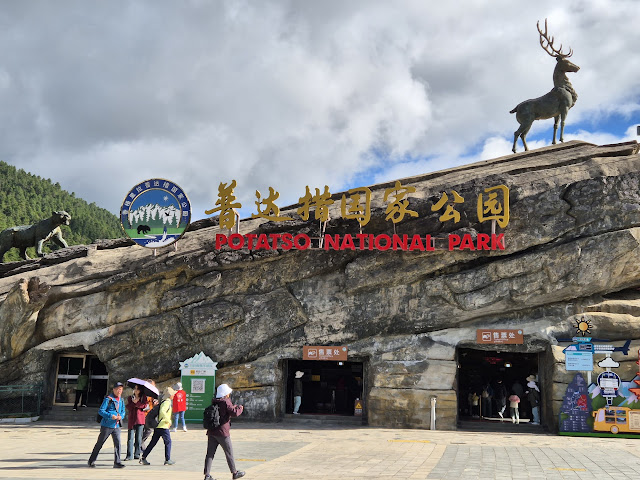
While waiting for our guide to purchase the entry tickets, we went to buy some coffee and saw a stall selling the yak meat skewers. The yak is a kind of hairy ox native to the part of the Tibetan plateau that stretches into Yunnan Province. Since we had yet to try the grilled yak meat, we were glad to make use of the opportunity to try some.
We were the stall’s first customer for the day. The lady manning the stall grilled just one skewer that my son ordered without any fuss. After the skewer was cooked, she added spices like salt, chilli and pepper powder onto it.


We saw the map of the park.

In the 500 square meters park, there are three main scenic areas open to visitors: Bita Lake in the south, Shudu Lake which is a part of Three Parallel Rivers Scenic Area in the north and Militang Alpine Pasture in the middle.
From the entrance, we had to take a green sightseeing bus. These sightseeing buses run among these scenic spots and stop at fixed stations as shown in the map. Travel route in the park is about 69 kilometers and it would takes about 4 to 6 hours to cover all the spots. Since we only had the morning to spend at the park, our guide recommended that we see Shudu Lake only.
There is commentary in Chinese, delivered by a lady with a microphone in the bus, as we travelled to Shudu Lake. It was about a 20 minutes’ scenic ride from the bus stop near the park entrance to Shudu Lake. By the time we arrived at Shudu Lake, it was almost 10.30 AM.
There is a nice 3.3 km long wooden walkway along the shore of this lake, making it easy to navigate. Visitors can also opt to take a boat ride on the lake.

We saw some wetlands at the initial part of the trail. The water from Shudu Lake actually drains out from this area. The weather was cloudy, cool and windless. This is a perfect place to soak in the fresh air and beauty all around us. It is also a perfect place for landscape photographers where there are rolling hills covered with forest, reflecting off the surface of the still water.

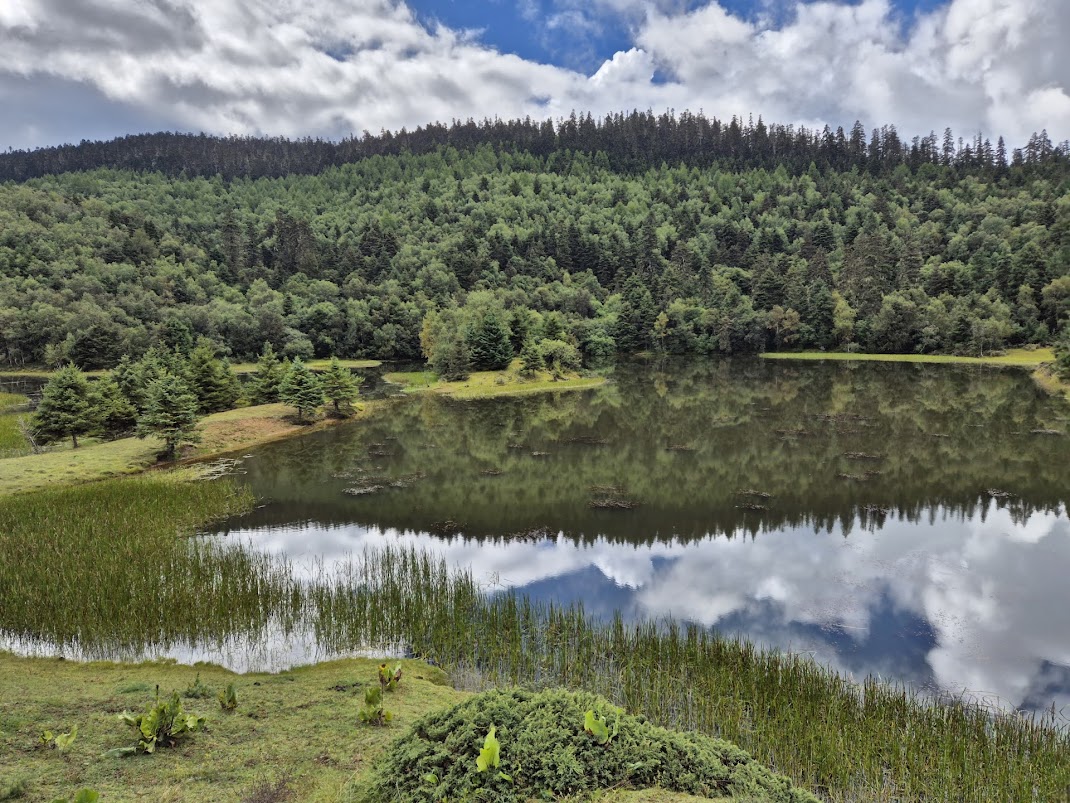

We were lucky to be able to see a flock of white eared pheasants. Although wild, they came close to the path and we were able to get good close up views of these birds.


Unfortunately, we did not have close encounters with the free ranging yaks and horses at Shudu Lake.


We were impressed by the scenery at Shudu Lake. Although the lake is at an altitude of 3,595 meters above sea level, we did not experience any ill effects of altitude sickness.


We saw an impressive white-hair yak that was used for photos. The guy would help visitors up on the back of the yak for a photo shoot with the gorgeous scenery in the background. He also sang some local folk songs while the photographs were taken, adding to the country vibes.
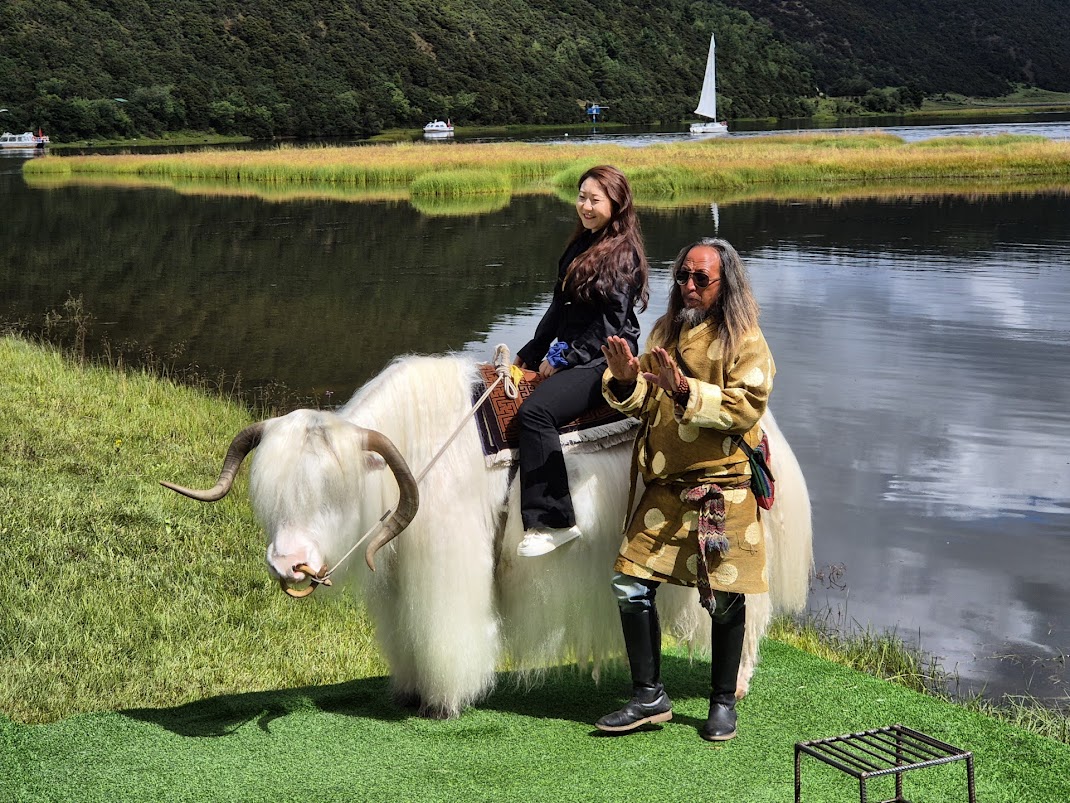

It was not crowded during our visit. We could enjoy a leisurely walk along the lake shore. We stopped often to snap photos of the landscape. Unfortunately, we did not spot any yaks, horses or other animals along the boardwalk at this area.


 Part of the boardwalk is over water.
 The later part of the trail is through a pine forest. Some of the pine trees in this area are huge.

We met some fearless chipmunks who came onto the boardwalk hoping for some food.


 This tree is larger than it looked on photo.
The forest also has some unique sights such as the “tree beards”. These are light greyish green lichen that hangs from the branches of some trees, giving an impression that the trees have beards.


The trail ended at Pier 3, which is also a stop for those who go on the boat cruise. From the pier, we could see a green meadow across the lake with many tiny black dots. These dots are yaks and horses.


Looking at the map on the Pier 3, I noted that there is an eco hiking trail that leads from the initial bus station to the meadow, along the northwestern shore of the lake. I would have loved to hike on this trail, if only we had the whole day at the park!

It was already slightly past noon time when we took the shuttle bus back to the entrance. Overall, we had spent about 90 minutes at Shudu Lake and it was a great experience.
If only we had time to spend a whole day at Potatso National Park.
 Typical Tibetan residential houses are painted white in colour.
  Beautifully decorated window with colourful eaves on top and black frame.
 Firewood and a lone chicken outside a house.
 We will be visiting this Tibetan family home.
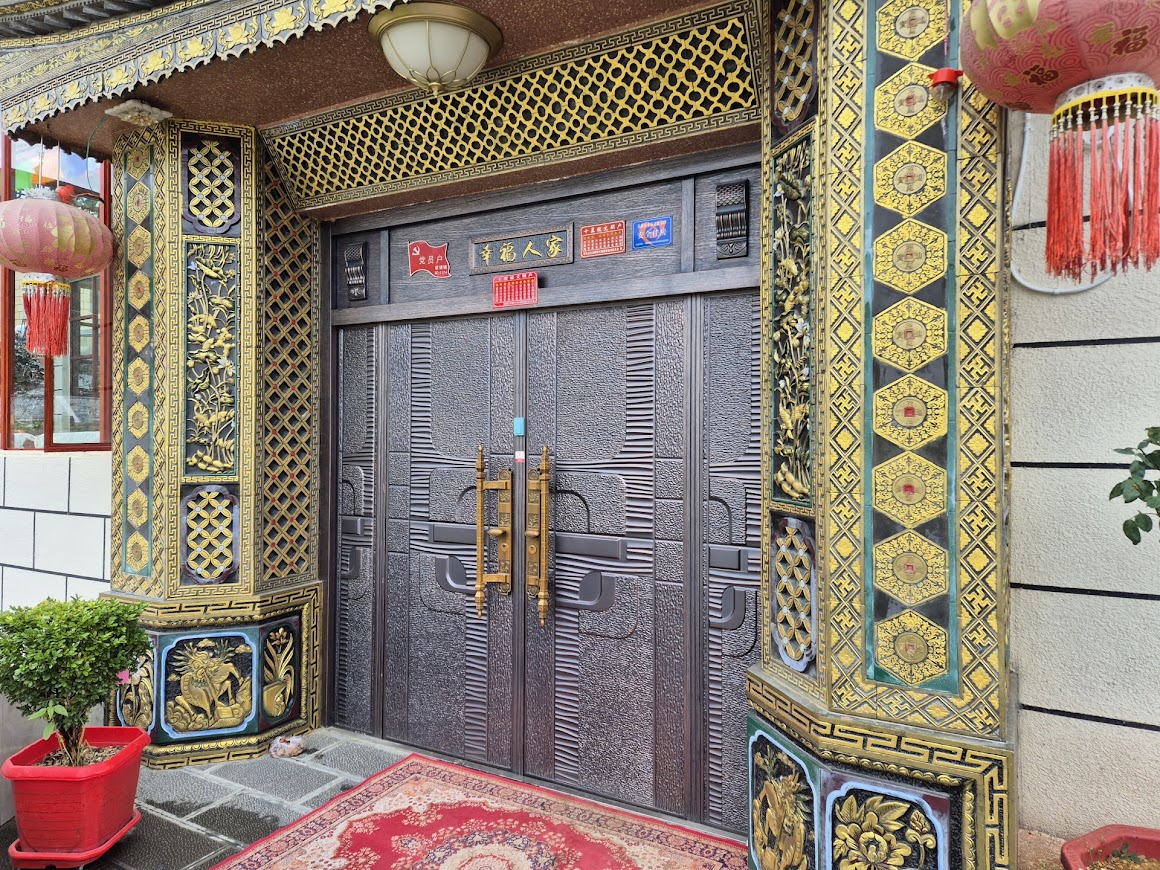 Exquisitely decorated doorway leading to a courtyard.
 Covered courtyard with transparent roof. Photos of the Chinese flags, China’s past and present leaders are hung on the eaves.
 Living room with traditional wooden furniture but modern flat screen TV.
 Traditional stove with 4 chambers sits in a corner.
 Apparatus used to make the traditional yak butter tea or po cha.
 Walking down to the dining room. The entire house is made of wood and look and feels solid. We could see the thick wooden columns made from local pine trees.
 Dining room with a pot of pre-made yak butter tea sitting on a electric stove.
 Yak butter tea.
 Table already preset with some appetisers and sauces.
  More snacks brought to our table.
 Eating pancakes the local way.
  So much food for just the three of us.
 Stir fried mushrooms with vegetable.
 Minced yak meat with celery and chilli.
  Pickled cucumbers.
 Fried egg with bitter gourd.
  Grilled chicken that is surprising well seasoned and tender.
 Enjoying Tibetan hospitality and delicious lunch.
 Walking to Songzanlin Monastery.
 Main entrance to the monastery.
 Dharma Wheel and a pair of deer on top on the entrance.
 View of the monastery from the gate.
 Walking through the main street lined with traditional Tibetan style buildings with white walls and colourful windows.
  146 steps to the top.
 View of Lamuyangcuo Lake from the Songzanlin Monastery.
 Large terrace with the religious buildings.
  Front view of the main assembly hall.
 View of the Shangri-La city in the distance.
  One of the many chapels on the side.
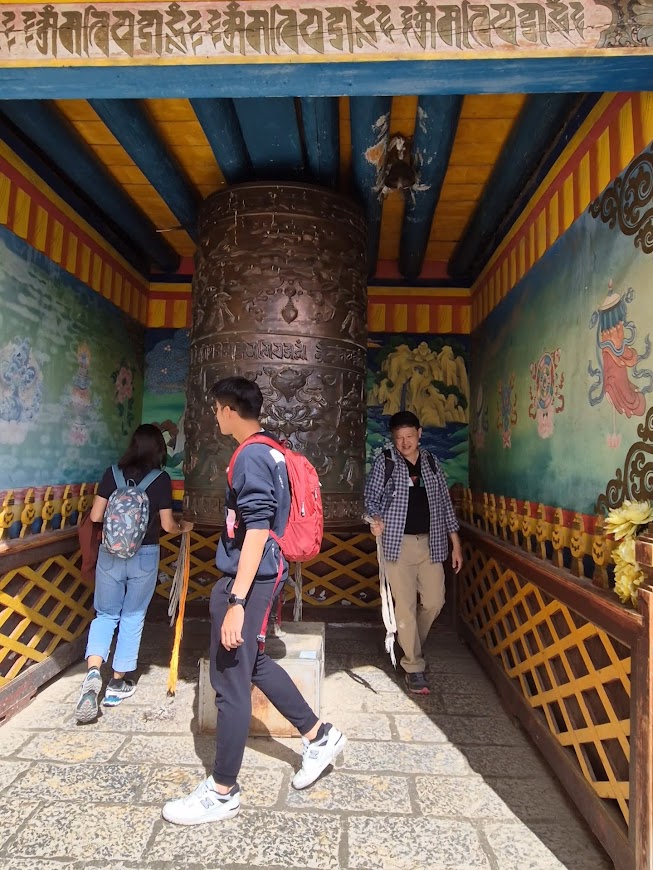 Spinning the prayer wheel at the Songzanlin Monastery. We are to spin this wheel 3 times.
 More prayer wheels.
 Group photo before leaving the monastery.
 The colourful roofs and structure of the monastery are best viewed from the path to the lake.
 Zoomed in photo of the roof structure.
 View of the monastery and its reflection on the surface of the lake at the first viewing platform.
  We could see dark clouds approaching!
 Taking photos at the second viewing platform at the center of the lake.
 The dark clouds rolling in add drama to this photo. Will there be a storm soon?
 Walking back to the monastery along the boardwalk.