Links to My Vacation Journals and Destinations

Looking for something in this blog?

Hill of the Buddha, Easter Island Moai and Stonehenge

29 August 2023

I figured that our long drive from Obihiro to Otaru, via Sapporo, using the Hokkaido expressways would be too boring without a pit stop at a Hokkaido attraction. Just before reaching Sapporo, we took the exit at the Kita-Hiroshima interchange and did a 25 minutes (17 km) detour to the Makomanai Takino Cemetery, located in the southern outskirt of Sapporo city.

What could we be seeing at a Japanese cemetery?

I never imagine that I would see the Easter Island Moai statues in Hokkaido but I did. In addition, I also got to see a replica of the Stonehenge and a statue of an enormous Buddha with his head peeking out over a mound covered with fields of lavender.

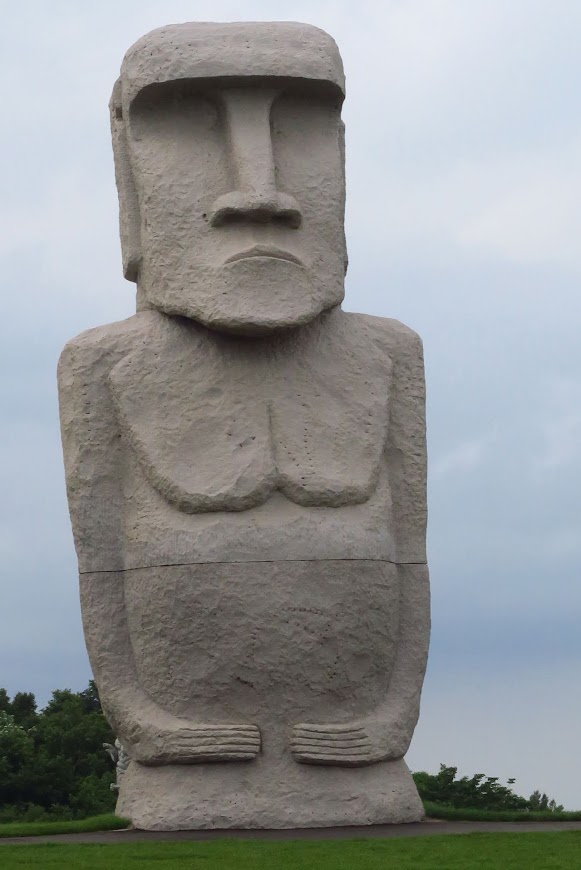
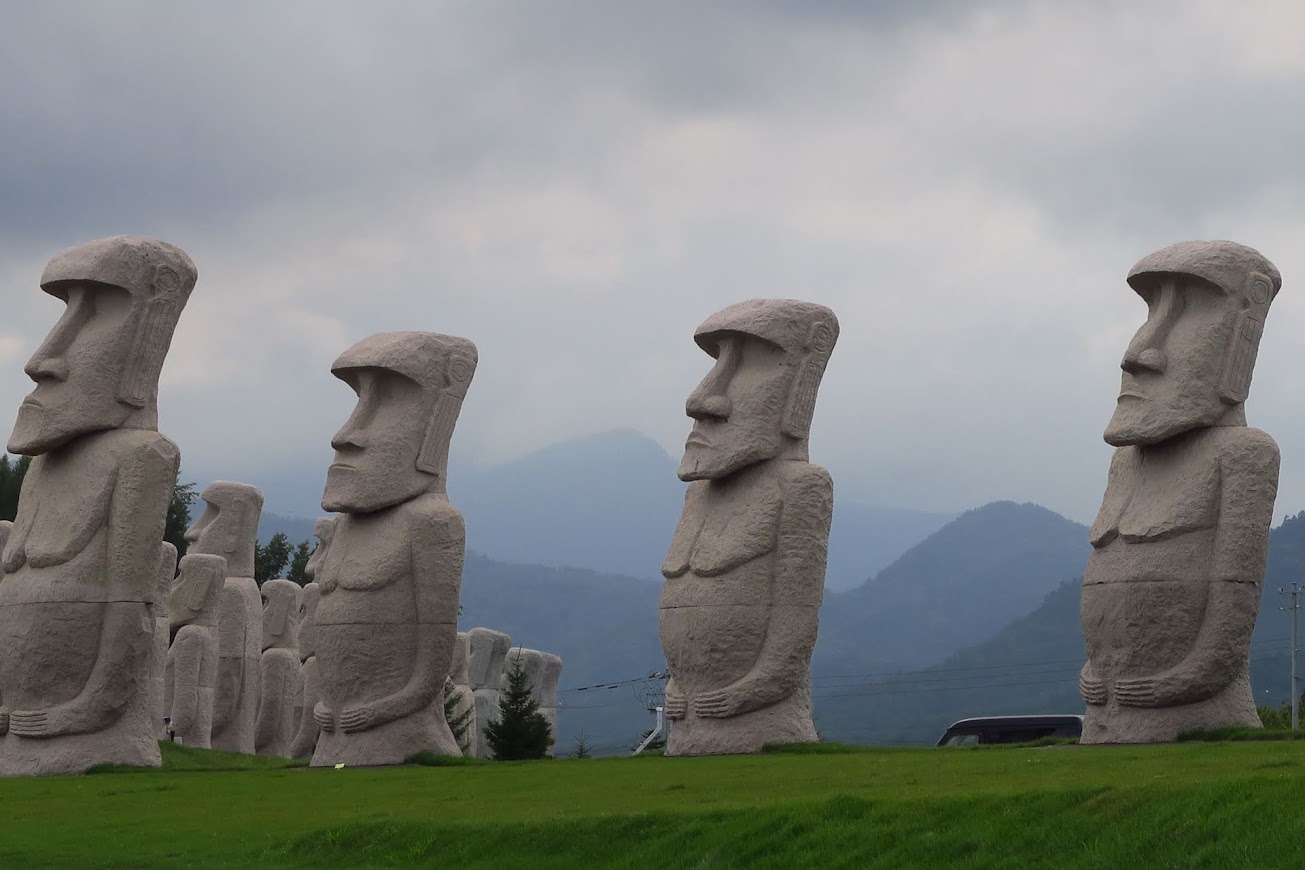
As we entered the western gate of the cemetery (Google map location here), a row of gigantic Moai statues could be seen on the left side of the road.

We did not stop here. Instead, we continued inwards and parked at a large car park (Google Map location here) next to a grass and lavender covered mound known as the Hill of the Buddha.

The Hill of the Buddha is a shrine that features a 13.5 meter tall statue of the Buddha. It was designed by Tadao Ando, an architect famous for working on many creative buildings both within and outside of Japan.  

With construction beginning in October 2013 and completed in 2015, Tadao Ando built a rotunda to encase the existing Buddha statue with an opening on top that allows the head to peek out.

The statue was named Atama Daibutsu because only the statue's head (atama) peeks out from the dome-shaped roof.

The rotunda is then covered with earth to form a mound that is then planted with 150,000 lavender plants. If we had come during the lavender season, the entire mound would be covered in purple lavender flowers.

After viewing the Buddha’s head peeking out from the mound of earth, we took a short walk to the entrance of the shrine. Being in August, we did not see any lavender flowers.

A 50 to 60 meters pathway through the fields of lavender leads to a walled rectangular water feature and then into a tunnel that leads into the mound. To enter the tunnel, we had to walk around the water feature, somehow symbolising that the path to the Buddha is not direct. There is a cafe at the end of the water feature.

  A long path with lavenders on both sides leads to the entrance. 

The path to the Buddha is not straight forward. We have to circle around this water garden before entering a tunnel leading to where the Buddha is enclosed.

A 40m tunnel that amplifies the sound of your footsteps you approached the rotunda.

As we walked into the tunnel and approached the Buddha, we could first only see the feet. Then the body and finally the entire 13.5 meters tall statue sitting on a pedestal.

The sky acting like a halo around the Buddha’s head.

In this shrine, devotees could write a wish on a wooden placard called an ema, find out their fortune by taking a slip of paper called an omikuji and make message lighting to express a wish. These activities cost a fee. The proceeds are used to maintain the cemetery’s grounds.

We could also make a prayer and sound a gong placed at the foot of the stairs.

Chairs are placed in front of the Buddha. We are welcomed to sit and gaze at the Buddha statue.

We sat on the chairs to gaze at the Buddha before walking around the statue to admire the architecture and see more Buddhist statues at the side.

Relax, reflect and gaze at the calming face of the Buddha.

We went to check out the Rotunda Cafe and Store located inside the Hill of the Buddha. The soft serve lavender ice cream was sold out, so we had coffee instead.

Recharged by the caffeine, we walked from the Hill of the Buddha to the row of Moai statues that we saw earlier.
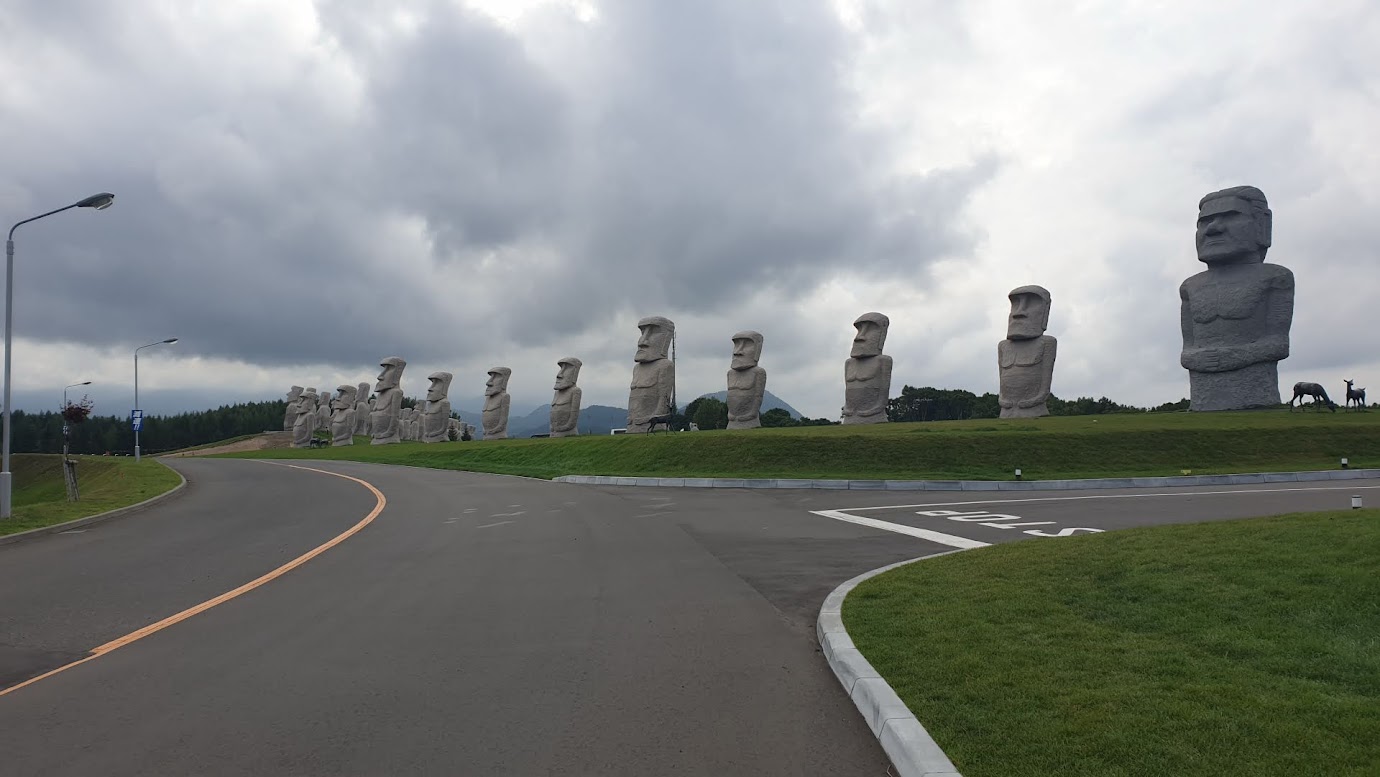
Walking to the Moai statues. Did you notice that one of the statues is different from the rest?

Moai statues are massive megaliths that are built in approximately 1400 - 1650 A.D. by the natives of Easter Island located in Polynesia. It is thought that the Moai were symbols of religious and political power and leadership and these statues represented the ancestors of the island people.

The average height of a Moai on Easter Island is about 4 meters and can weigh around 12.5 tons each. But some could be up to 12 meters tall. These replicas, in Hokkaido, are of similar sizes. 

Replicas of the Easter Island Moai in Hokkaido.

The faces on these Moai have distinct features, such as broad noses and strong chins jutting out from the rest of the body.

The Moai statue at the back – who does it resemble?


We walked to the replica of Stonehenge that is located a fair distant away. The weather and peacefulness of the surroundings made the walk very pleasant.

Walking towards the replica of Stonehenge.

Just like the real Stonehenge that we visited in the England, we did not get to see the stone blocks up close. There was a sign that told visitors to keep off the grass. Being the law-abiding tourists, we did just that although there were some other tourists who went to see the replica up close. 

Close-up photo of the Stonehenge replica.

I think the visit to the Hill of the Buddha was worth the detour (and one extra hour of driving time) that we took. The Buddha shrine was an amazing piece of artistry from the architect that is not to be missed. Plus the bonus of seeing and snapping photos of the replicas of the Easter Island Moai statues and Stonehenge. Although the shrine and sculptures are located in a large cemetery, the area that we walked through did not have any graves. 

From the Makomanai Takino Cemetery, we drove back to the Kita-Hiroshima Interchange to continue our journey along the tolled expressway to Otaru.
Continue Reading »

Otaru Denuki Koji and Otaru Canal in the evening

29 August 2023

After a long drive from Akan Mashu National Park with stopovers at Obihiro and Hill of the Buddha, we arrived at Otaru in the evening.

Otaru is a port city that lies just 30 minutes north of Sapporo and is one of the most well-known sightseeing spots in Hokkaido. Being a port city, Otaru serves some of the freshest seafood in Hokkaido. In addition, Otaru is famous for its glass products, music boxes, fancy desserts and alcohol beverages (beer, wine and Nikka whiskey).

Most tourists visit Otaru as a day trip from Sapporo. We chose to stay two nights in Otaru. We would be using Otaru as a base to explore the Shakotan Peninsula by car on one day, visit the Nikka whiskey distillery at nearby Yochi on another day and some time in the afternoon of both days to explore Otaru itself.

We spent our first evening in Otaru exploring the famous Otaru Canal area and also had dinner at the Otaru Denuki Koji.

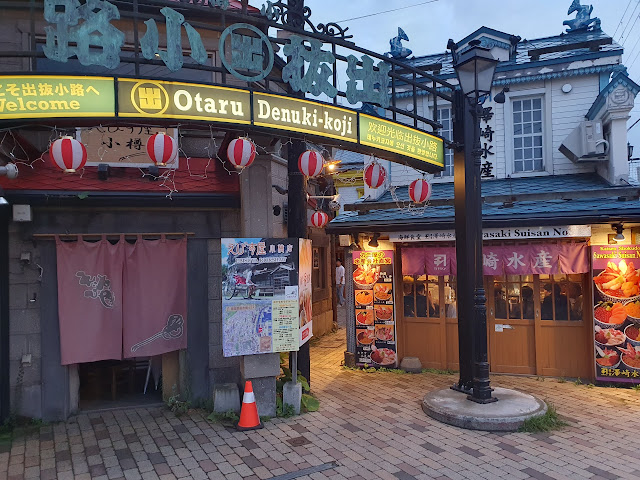
Otaru Denuki-Koji

We chose this place since it is located just across from the famous Otaru Canal at the Asakusa Bridge intersection. Our plan was to explore the canal and the surrounding area after dinner.

Otaru Denuki-Koji.

Otaru Denuki Koji is a quaint alleyway lined with restaurants & food bars that are modeled around the image of colonial Hokkaido. At night time, the glowing lanterns make for a nostalgic atmosphere.

There is a Wagyu Kurosawa restaurant located in Denuki-Koji.

My original plan for dinner at Otaru was beef cutlet at Wagyu Kurosawa. There are several outlets all over Otaru. But rules are made to be broken and plans are made to be changed! 

After checking out the menu of the restaurants within Denuki-Koji, we picked a small tempura bar called 天ぷら藏谷 (Google map location here). There are seats for only about 6 to 7 persons at the counter and another couple was already enjoying their dinner when we entered.

The tempura bar is manned by a sole chef who takes order, prepares the tempura and serves it to us on the counter. The dishes available were posted on the walls and also on a piece of laminated card.

Menu at the tempura bar in Otaru Denuki Koji.

To make things simple, we ordered the Kaisen ten-don tempura set and beer.

The ingredients were freshly prepared. After placing our order of the Kaisen ten-don, we sipped our beer and watched our meal being prepared. Expertly preparing the seafood elements using a sharp knife. These includes salmon, crab claw and scallop.
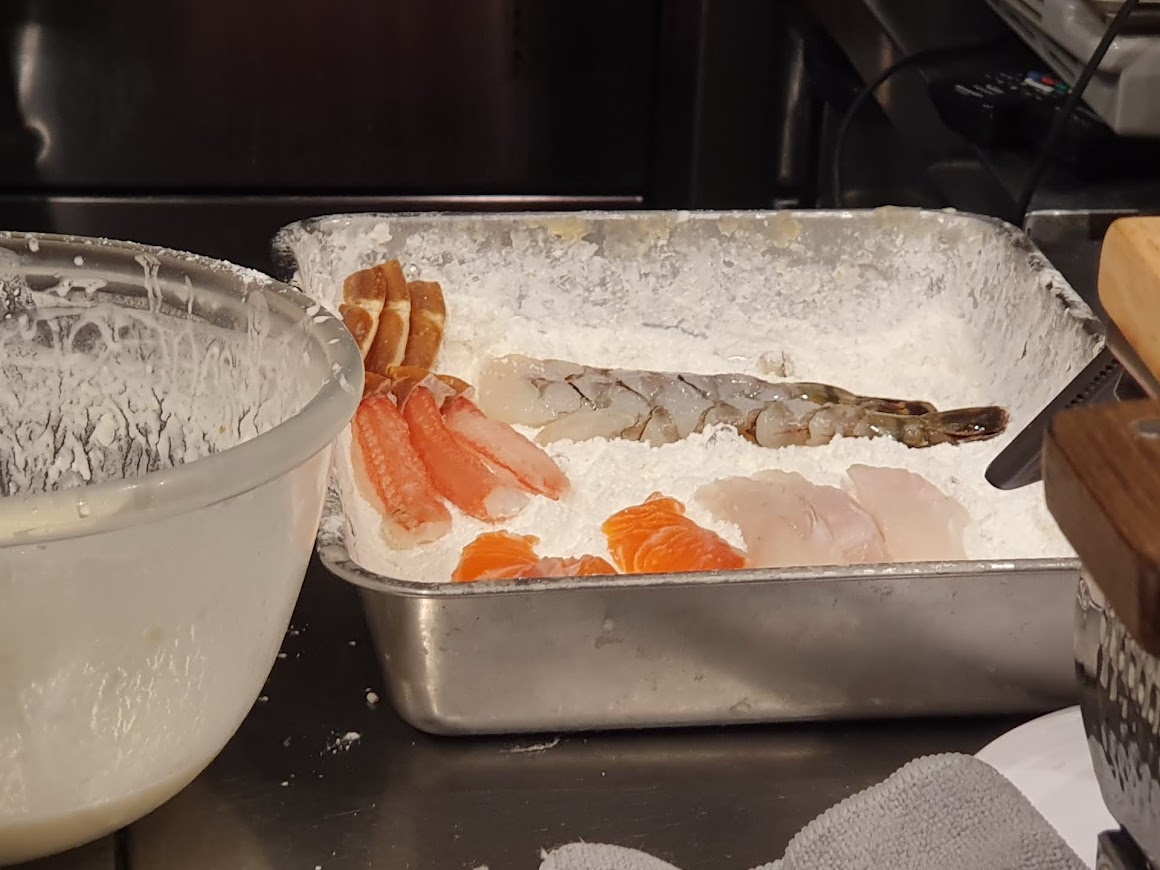
The seafood is carefully dried with paper towels before coating with the tempura flour and batter.

The chef deep frying the tempura while preparing other elements for our meal.

The finished product. Kaisen Tendon with scallop, prawn, crab claw, salmon, fish with white fresh, enoki mushroom and brown mushroom. The meal came with a bowl of miso soup with pieces of bean curd and mushroom.
 

The tempura was delicious and highly recommended. The tempura is best eaten with Hokkaido beer (400 yen per glass).  We also added a side dish of the famous Hokkaido white corn that is known to be extra sweet. This 400 yen dish came with two tiny pieces of corn. Delicious but not value for money I think.

After dinner, we climbed up to an observation deck located inside Otaru Denuki Koji. This used to be a fire watchtower. Entry is free and the spiral staircase is narrow. From the top of the tower, we got a nice view of the Otaru Canal across the road junction.

View of Otaru Canal from the observation deck.

View of the Observation Deck inside Otaru Denuki Koji.

Otaru Canal at night

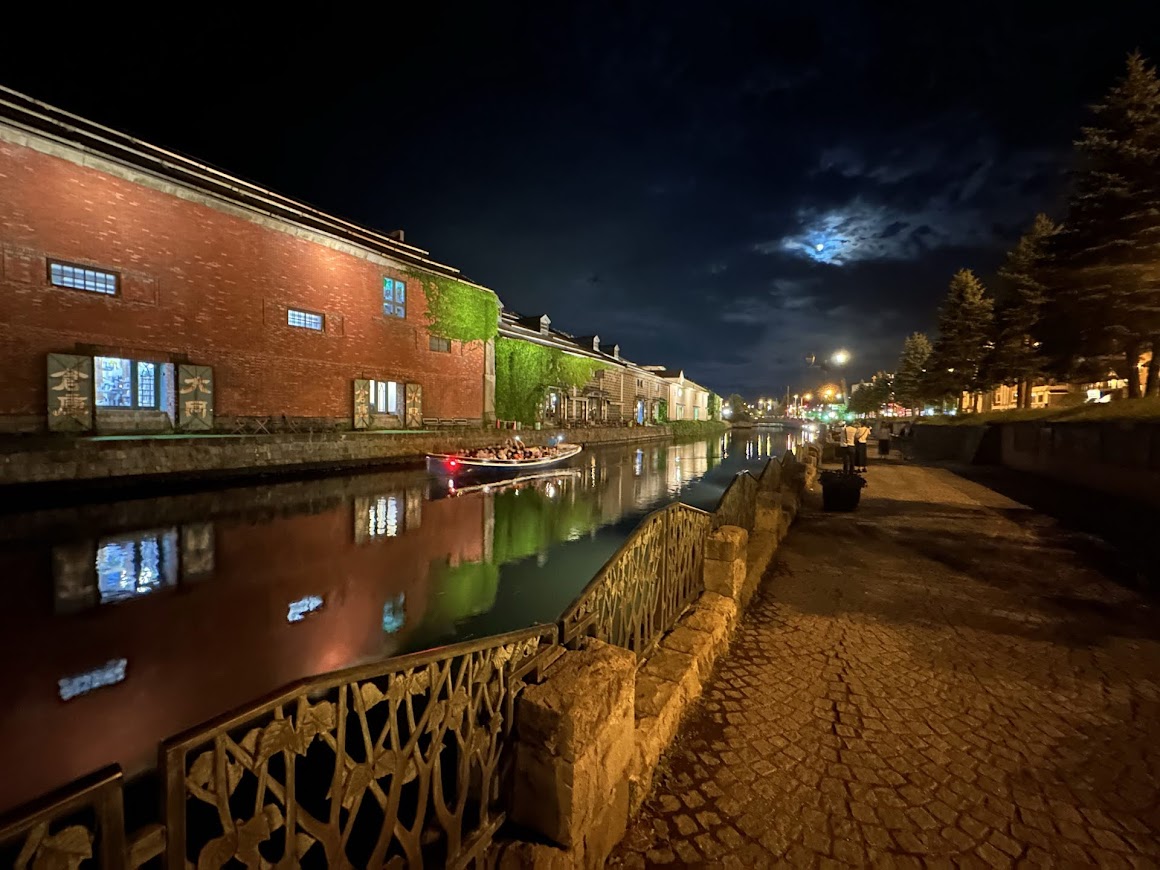
You cannot come to Otaru and not see the famous Otaru Canal. The canal was used as a maritime transport route for the city in the old days. Warehouses lined the sides of the waterway. After the canal fell into disuse, the whole area was repurposed as a tourist spot. Old Meiji Era stone warehouses that bordered the canal were transformed into cafes and restaurants.

One of the stone warehouses at the side road parallel to the canal.

It is best to visit the canal at night. The gas lanterns line the canal walkway and are lit at dusk, creating a romantic atmosphere unique to Otaru.

Otaru Canal at night.

The Canal Boat Ride is quite popular with visitors, with long queues. We did not take the boat ride.

It was almost full moon on this night but the clouds shrouded the moon.

Otaru Beer Warehouse No. 1

Inside of the Otaru Beer Warehouse No. 1

One of the warehouses along the canal has been repurposed into a beer restaurant. It features a German-style brew hall with educational tours & tastings, plus dishes like schnitzel & sausages. It sells its homemade beer, of course.

There was a queue to get a seat at the beer restaurant, so we just browse the exhibits on the second floor.

Naruto Fried Chicken and the old Temiya Railway Line

I have read that one of the “must try” food in Otaru is the fried chicken from Naruto. We decided to go buy some takeaway fried chicken from the Naruto Main Shop (Google Map location here) for our supper back in the hotel.

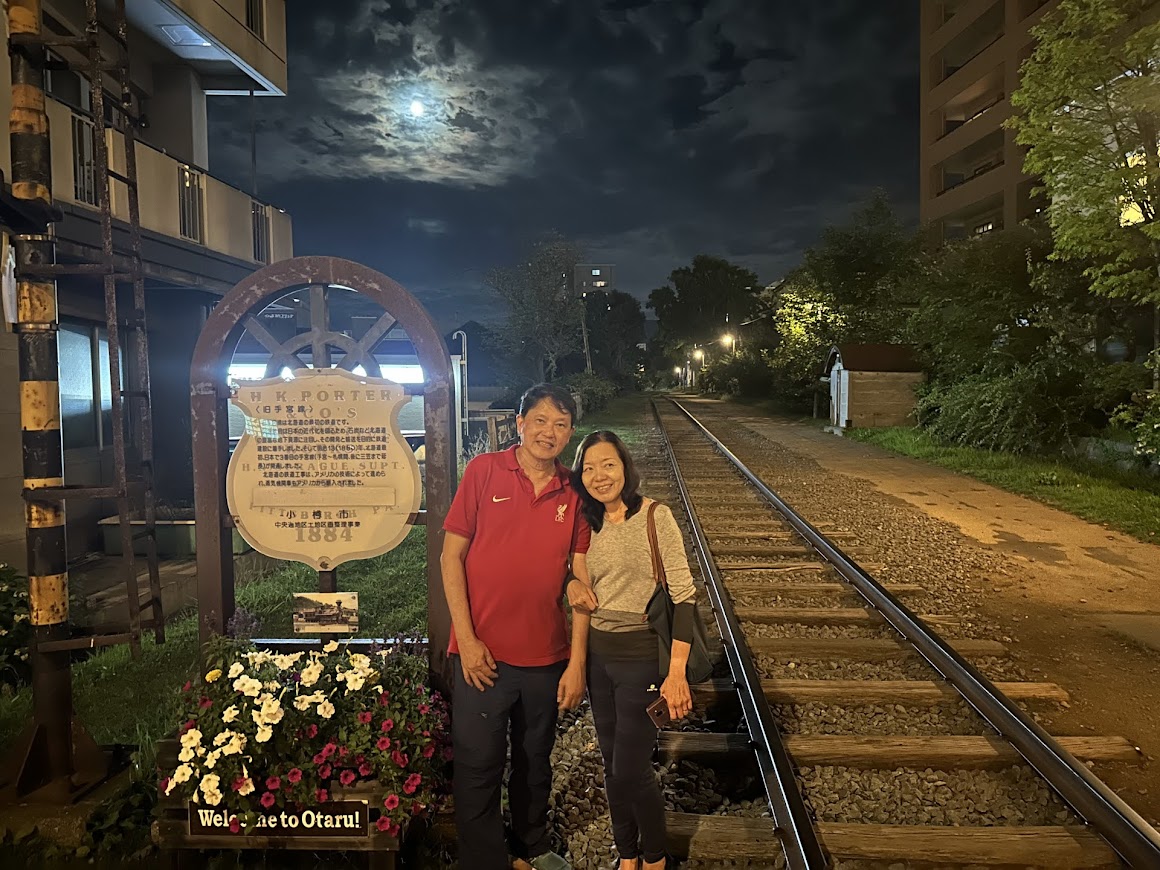
On the way, we chanced upon the now disused Temiya line of the former Japanese National Railways that is now transformed into a park. The Temiya line was the first railway in Hokkaido, built in 1880, to transport coal and goods inland from the port. The rails are still intact and this is a great spot (Google Map location here) for taking photos. 

Nice photo spot at the disused Temiya line of the former Japanese National Railways.

Naruto Fried Chicken for supper.

The Naturo Main shop is a restaurant serving a wide range of food for lunch and dinner. We bought their signature half fried chicken for 990 yen.

It was quite a long walk back to our hotel via Miyako dori Shopping Street. This is a covered shopping street which sells everything from food, clothes to groceries. By this time, all the shops were closed and the shopping street was deserted. We are in Japan, so we knew the street is safe at night.

On the way back to our hotel with the takeaway chicken in hand.

Although we did not eat the chicken right away, the skin was perfectly crispy and the meat had the most wonderful flavour. Highly recommended for the first try, but I will not go out of my way again to eat this chicken.

Where we stayed in Otaru.

Our hotel in Otaru was the Otaru Authent Hotel. It is located in the central part of Otaru and within walking distance to key attractions and also the JR train station.

Otaru Authent Hotel.

The Triple Room is quite spacious by Japanese standard and we had quite a nice stay in this hotel.

Parking is not free at this hotel. It costs 1000 yen per night which is reasonable for a hotel located in Otaru’s city center. The car is stored in an automated storage and retrieval system.

Automated storage and retrieval system for car at the Authent Hotel.

Car parking system at the Otaru Authent Hotel.

This is the way to retrieve the car. Due to lack of space, a turntable system is used to rotate the car to face the main road after retrieval.

Continue Reading »

Our Breakfast at the Sankaku Market in Otaru

29 and 30 August 2023

On both mornings of my stay in Otaru, we had breakfast at the Sankaku Market (三角市場).

Why?

Sankaku Market is one of the few places in Otaru that opens early for breakfast. There are not many options for breakfast unless you fancy fast food joints like MOS Burger, Burger King, McDonald’s or Sukiya, the local fast food restaurant chain.

Sankaku Market is a great place to get a hearty breakfast of Hokkaido’s fresh seafood. Fresh as in the sea critters, such as the live king crabs, are still alive and kicking in the tanks or plastic tubs  And live king crab is one of the things we wanted to try while in Hokkaido.

Posing with a large live King Crab in the Sankaku Market, Otaru

It is also conveniently located next to the Otaru JR train station and within walking distance from our hotel.

The market is actually not very big. The name “Sankaku”, which means “triangle”, came from the shape of the roof and also the land that the market sits on. There are about 16 shops lined up on both sides of a narrow 200-meter-long, 2-meter-wide lane. These shops sell sea food such as crabs, sea urchins, scallops and fish, as well as vegetables, fruits, and daily necessities. 

Browsing at the menu and products on offer in the Sankaku Market. Note the relatively “empty” market in the early morning.

The market is a “must visit” for visitors to Otaru or even Sapporo. Hence it will get very crowded when day trippers from Sapporo arrives by train. It is good that we went early on both mornings.

Kawashima Fresh Fish Store and Restaurant

On our first visit to Sankaku Market, we were not pressed for time. So, we could have a leisurely feast of live crabs for breakfast.

After a quick browse through the market, we decided on Kawashima Fresh Fish Store, partly because of their impressive display of live crabs and partly because of the charisma of the seller in the shop we spoke to.

This store has an impressive display of many varieties of crab, including the King Crab, Hairy Crab and the seasonal Hanasaki Crab.

The largest of the crabs are the gigantic King crab that can grow up to a few kilograms in size. The King crab is the most expensive. The larger the crab, the higher the price per kg.

The slightly smaller hairy crab with fine hairs on the shell and legs. It is well known for the “kani-miso” which is the creamy and salty, paste-like crab innards. (Season: Year-round)

The Hansaki Crabs with lots of thorns on the hard shell. (Season: May-August). In Japan, Hanasaki crab can only be caught off the coast of Nemuro in Hokkaido.

We ordered a “small” 1.8 kg King Crab at 15000 Yen per kg and a 700 g Hanasaki Crab at 9000 Yen per kg. The staff at the shop suggested that the King Crab be cooked two ways (half of the crab to be grilled and the other half boiled) while the entire Hanasaki crab is boiled.

When boiled, the Hanasaki Crab turns bright red like a flower ("hana" means "flower" in Japanese).

Our selected crabs were prepared and cooked in the restaurant next to the store. It took about 20 minutes for the crabs to be cooked.

Restaurant staff preparing the crabs we ordered.

The friendly seller was happy to pick out crabs from his tanks for us to do a photo shoot while waiting for our orders to be cook.

He deliberately chose a much larger King Crab for our photo shoot. This crab probably weighs over 3 kg.

Holding a thorny Hanasaki Crab carefully for a photo.

The restaurant’s chef expertly cut the cooked crabs so it was very easy for us to eat without getting pricked by the thorny shells, especially the Hanasaki Crab.

Grilled King crab.

Boiled King Crab.

The King Crab has the best sweetness and I think is the best tasting crab. Personally, I prefer the texture of the boiled crab over the grilled crab which was sweeter but a little drier after cooking.

Boiled Hanasaki Crab. Bright red like a flower.

The slightly yellowish flesh of the boiled Hanasaki crab.

It was good that we had the chance to try the Hanasaki Crab. This seasonal crab is less likely to be available outside Hokkaido. The Hanasaki crab has a richer body taste and a shrimp-like flavour.

The prices of the crabs at the touristy Sankaku Market is probably higher compared to the local markets but I have no regrets to splurge a little to enjoy quality products and unique experiences. Freshly boiled live crab is especially delicious compared to the frozen ones we usually eat back home. It also features a crisp and elastic texture.

Kawashima Fresh Fish Store and Restaurant also offers other seafood dishes as shown by the menu on the wall.

 Menu displayed in the restaurant includes the popular seafood donburi and grilled fishes.
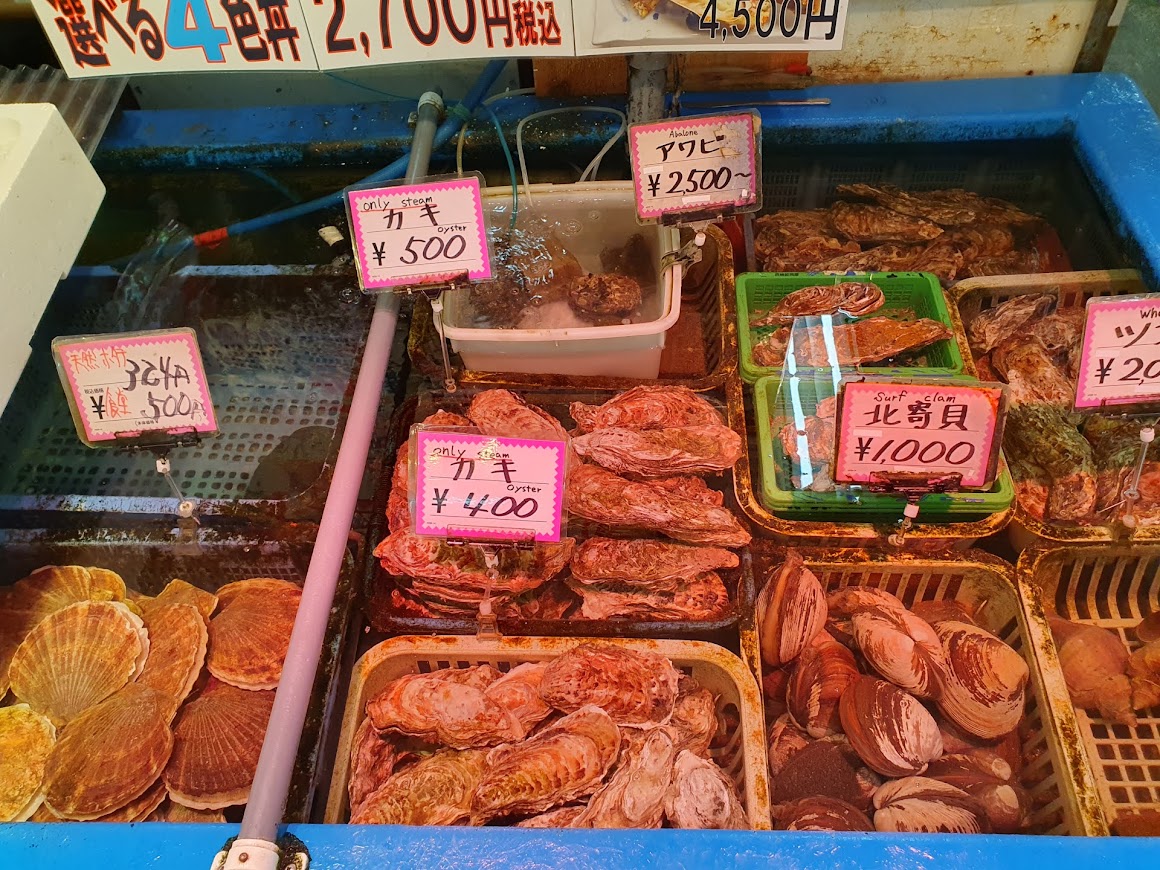
Varieties of shellfishes available.

We had grilled scallops for 500 yen each.

Maruki Takinami Shoten Kita no Donburiya Restaurant

Our second visit to the Sankaku market was the morning before our train ride from the Otaru JR Station to the Nikka Distillery located in Yochi.

We chose to try the popular kaisen donburi (seafood rice bowl) at the Maruki Takinami Shoten Kita no Donburiya Restaurant. On an earlier visit, we noticed that this is one of the most popular kaisen donburi restaurants in the market with long queue of waiting customers.

Even at 8 am in the morning, we had to register our names on a notepad in front of the restaurant and wait for seats. The small restaurant has about 2 rows of 4 tables and maximum 4 persons per table.

There is a row of chairs at the side of the restaurant for the people in the queue. Since we were early (the restaurant opens at 8 AM), we did not have to wait very long. Only 10 minutes.

This shows how popular this restaurant is. Having to queue even when the overall market is not crowded.

Various kaisen donburi combinations are available at the restaurant.

We could also create our own seafood donburi by selecting our own favorite seafood items. The flexible menu lets us choose from 3 or 4 combinations of sashimi on rice and how much rice we want (either normal or large size).

The sashimi options includes salmon roe (ikura), salmon, crab, tuna, botan shrimp, amaebi or cold water northern shrimp, live scallops, cured prawn roe (ebiko) and sea-urchin roe (uni). The more expensive sea urchin roe requires a top up of 330 Yen.

I think this is really value for money. No wonder this restaurant is so popular.

Co-incidentally (or great minds think alike), we all chose to have the same 3-items rice bowls with salmon sashimi, ikura (salmon roe) and uni (sea-urchin roe). For me, I chose the ikura and uni plainly because it is difficult to get fresh and high quality ikura and uni back home and I do not like the taste of raw shrimps and scallops.

Our chosen combination of kaisendon with salmon sashimi, ikura (salmon roe) and uni (sea-urchin roe).

There is also a bowl of complimentary soup served with the kaisen-don.

There are also grilled dishes served at this restaurant.

We could not resist having more of our favourite shellfish. We ordered the grilled scallops for only 330 yen each! Much cheaper than what we had paid at other restaurants in this trip.

Grilled scallops for 330 yen each.

We enjoyed our breakfast of fresh seafood kaisen donburi for at Sankaku Market. We actually ate quite fast because we had a train bound for Yochi to catch at the Otaru JR Train Station located next to the market. We spent about 40 minutes in the restaurant (order, wait for food to be served and enjoying our meal).

Imagine how long the queue would be(probably an hour or more) during the peak hours.

Continue Reading »

Welcome to igoiseeishoot!

Thanks for visiting the igoiseeishoot blog. If you are visiting for the first time, you may want to start here.

This blog is where I share the places I have been to (I go), my experiences at these places, people I met, food I tried and things that fascinated me (I see) and memories of my travels and vacations with lots of photos (I shoot).

I hope you will enjoy reading the posts or find something useful in this blog.

I would love to hear your thoughts or feedback by email (igoiseeishoot@gmail.com) or dropping some lines into the comment boxes of the posts.

Stay connected with me on instagram.